Amazon EC2, or Elastic Compute Cloud, is one of the foundational services in AWS. Even as managed services, serverless platforms, and container orchestration become more common, EC2 remains a core building block because many workloads still benefit from flexible virtual machines.
What EC2 Provides
EC2 gives you compute instances in the cloud. Instead of buying physical servers, you provision virtual machines on demand with a chosen instance type, operating system, storage, and networking configuration.
Why EC2 Still Matters
It gives strong control over the operating system and runtime.
It works well for legacy applications and custom infrastructure.
It is often the easiest place to start when moving a workload to AWS.
It integrates with the rest of the AWS ecosystem.
A Practical Use Case
Suppose you have an internal web application with a PostgreSQL database, background jobs, and a VPN dependency that requires operating system customization. Running it on EC2 may be more straightforward than immediately redesigning it for serverless or Kubernetes.
Important Concepts Around EC2
AMIs: machine images used to launch instances.
Security Groups: virtual firewall rules.
EBS: block storage attached to instances.
Auto Scaling: adjust instance count based on demand.
Load Balancers: distribute traffic across instances.
Common Mistakes
treating EC2 instances as snowflakes instead of automating setup,
opening overly broad security group rules,
forgetting monitoring, backup, or patching processes,
using EC2 where a managed service would reduce operational work.
Final Thoughts
EC2 remains important not because it is the newest AWS service, but because it is flexible and predictable. Good infrastructure engineers know when to use EC2 directly and when to move to higher-level managed services instead.
2020 is a very special year, in this year we learn some new words, bad words: Lockdown, Covid-19, World-pademic, stay at home … It can be said that this is a sad year. But it is also an opportunity for us to give love to other people around us, while looking at ourselves and preparing for the good of 2021.
Branding is time and resource consuming , big companies are trained on it – and they’re good at it. But how do we often use those skills to build our own personal brands? For many of us, we don’t usually get involved in personal branding . And in this post I want to share the 7 steps I take to build personal branding on Linkedin, with hundreds of thousands of others, not just for a good job, but also for personal branding. mine.
We don’t because we are busy and because it can sometimes feel selfish or egotistical to invest time in marketing ourselves. But by ignoring personal brands, we don’t just sell ourselves – we miss a huge opportunity from a marketing perspective. The impact of those who share content is enormous. And the most effective employees sharing are the ones who have built their personal branding on LinkedIn.
Here are 7 profile features you should check out and update for 2020.
1. Choose the right profile picture for LinkedIn
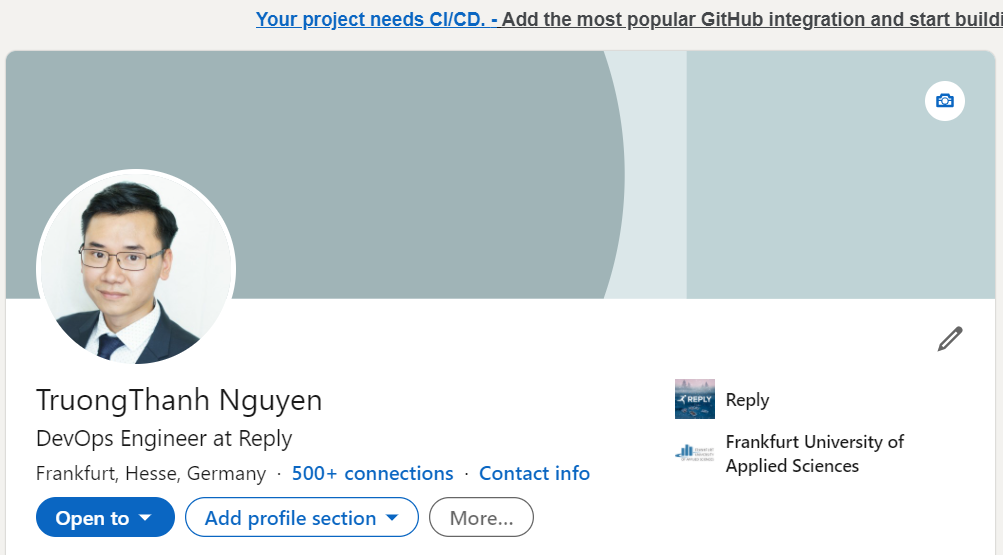
Your profile photo is your business card on LinkedIn – that’s how people are presented to you and (visual creatures are us), it dominates their impression in the first place. There are some great posts explaining how to choose the right profile picture on LinkedIn – but here are some quick tips to get started: make sure that photo is recent and like you, makeup on your face about 60% (long – picture taken horizontally does not stand out), wear what you want to wear to work and smile with your eyes n.
2. Add a background image
Your background image is the second image element at the top of your profile page. It obtained the attention of everyone, put context and show a little more about what’s important to you. More than anything, the right background images help your site stand out, collect the attention and always memorable.
3. Set your title is not just a job title
There’s no rule saying that the description at the top of your resume page is just a job title. Use the title field to say a little more about how you see your role, why you do what you do, and what makes you tick. If you have sales reps at your company who are engaged in social selling, then take a quick look at their profile page titles for inspiration. They will almost certainly have more of their job titles in it.
4. Turn your summary into your story
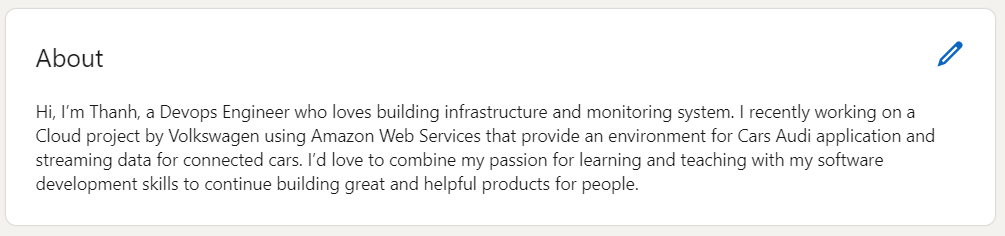
The first thing to say about your LinkedIn summary is – make sure you have one . Your summary is your chance to tell your own story – so don’t just use it to list your skills or job titles you already have. Try to make it descriptive about why those skills are important – and the difference they can make for the people you work with. Don’t be afraid to invest time, try a few drafts and run your summary in front of people you know. This is your most personal piece of content marketing , so speak your own language .
5 . Grow your network
Take advantage of the LinkedIn feature that suggests people you can connect with. It’s amazing how effective this can be at finding relevant people to reach you on , no connection requests being sent without your permission, because So you can check all potential connections. Also, get into the habit of chatting with the LinkedIn connection requirements – it’s a great way to keep your network up and running.
6. Share content related to your work
Your LinkedIn Have a network of connections on LinkedIn, and you have an active role in that network, appearing in the LinkedIn feed of your connections in a way that adds value to them. Sharing relevant content with your network is one of the most accessible ways to do this. You can start by tracking information on linkedin of themselves and share content that you find really interesting position , or related to your industry .
7. Publish long-form content – and use it to initiate a conversation
The more you share and comment on content, the more you will establish your expertise and thought leadership information on LinkedIn. Publish post long form is the next step according to the natural need to take. A great starting point is to track the response you get to your comments and shares. Are there specific topics and perspectives that seem relevant to your network? Is there a comment you shared that you feel would be expandable in a post? Developing your thought leadership in this way keeps it realistic – and keeps you on the lookout for the issues your relationships are talking about. Get ready for your long posts to start new chats. Keep track of comments and be ready to respond.
Make your LinkedIn profile more active so that you don’t have to waste time organizing your resume for a job, getting the recruiter to find you . Try working through these ideas, building from idea to idea – and you’ll find that you can make rapid progress, even if you can only spend a few minutes in lunch break or in the evening. After taking full advantage of your LinkedIn profile, you’ll be amazed at the difference it can make for both you and your business .
Starting a blog or website sounds easy at first. Buy a domain, publish a few posts, and wait for traffic. In reality, good websites grow through consistency, clarity, and patience. Before writing seriously, it helps to understand a few things that matter much more than people expect.
1. Content Quality Matters More Than Publishing Excitement
The hardest part is not starting. The hardest part is continuing to publish articles that are useful, readable, and worth returning to. A website grows when the content helps someone solve a problem, learn something, or feel connected to a real voice.
2. Structure Helps Readers Stay
Good articles are easier to read when they have clear titles, subheadings, short paragraphs, and examples. Readers do not stay because you wrote a lot. They stay because the article respects their time.
3. SEO Is Helpful, but It Is Not Magic
Search engine optimization matters, but it should support clarity rather than replace it. Useful titles, clean URLs, internal links, readable formatting, and topic consistency are all more sustainable than trying to game rankings.
4. Consistency Beats Intensity
Publishing ten posts in one week and then disappearing for months is less useful than publishing strong articles steadily. Websites become valuable when readers can trust that useful work will continue to appear.
5. Your Website Reflects Your Thinking
A blog is not only a traffic channel. It is also a portfolio of how you think. For engineers especially, a website can show communication skill, technical clarity, and long-term learning discipline.
Final Thoughts
If you want a blog or website to matter, focus on usefulness, structure, and consistency. Good content compounds slowly, but once it does, the website becomes more than a page on the internet. It becomes part of your professional identity.
AWS can feel overwhelming when you first open the console. There are many services, many acronyms, and many possible architectures. The good news is that you do not need to master all of AWS to get value from it. A practical DevOps starting point is to understand a small set of core services and how they work together.
The First AWS Concepts Worth Learning
EC2 for compute,
S3 for storage,
IAM for identity and permissions,
VPC for networking,
CloudWatch for logs and monitoring.
Why DevOps Engineers Care About AWS
AWS gives engineers infrastructure that can be provisioned, automated, scaled, and monitored through APIs and infrastructure-as-code tools. That changes operations from manual server work into repeatable engineering workflows.
A Good Beginner Path
Launch and secure a small EC2 instance.
Store and retrieve files from S3.
Create an IAM user and understand permission boundaries.
Learn how VPC and security groups affect connectivity.
Use CloudWatch logs and alarms to observe a simple service.
A Practical Mindset
Beginners often focus too much on memorizing service names. A better approach is to ask: what problem does this service solve? Compute, storage, identity, networking, and observability are the real concepts underneath the product catalog.
Final Thoughts
AWS becomes approachable when you learn it as a system rather than as a giant list. For DevOps work, the goal is not to know everything. The goal is to build reliable and repeatable infrastructure habits from the beginning.





 ACE IT SKILLS