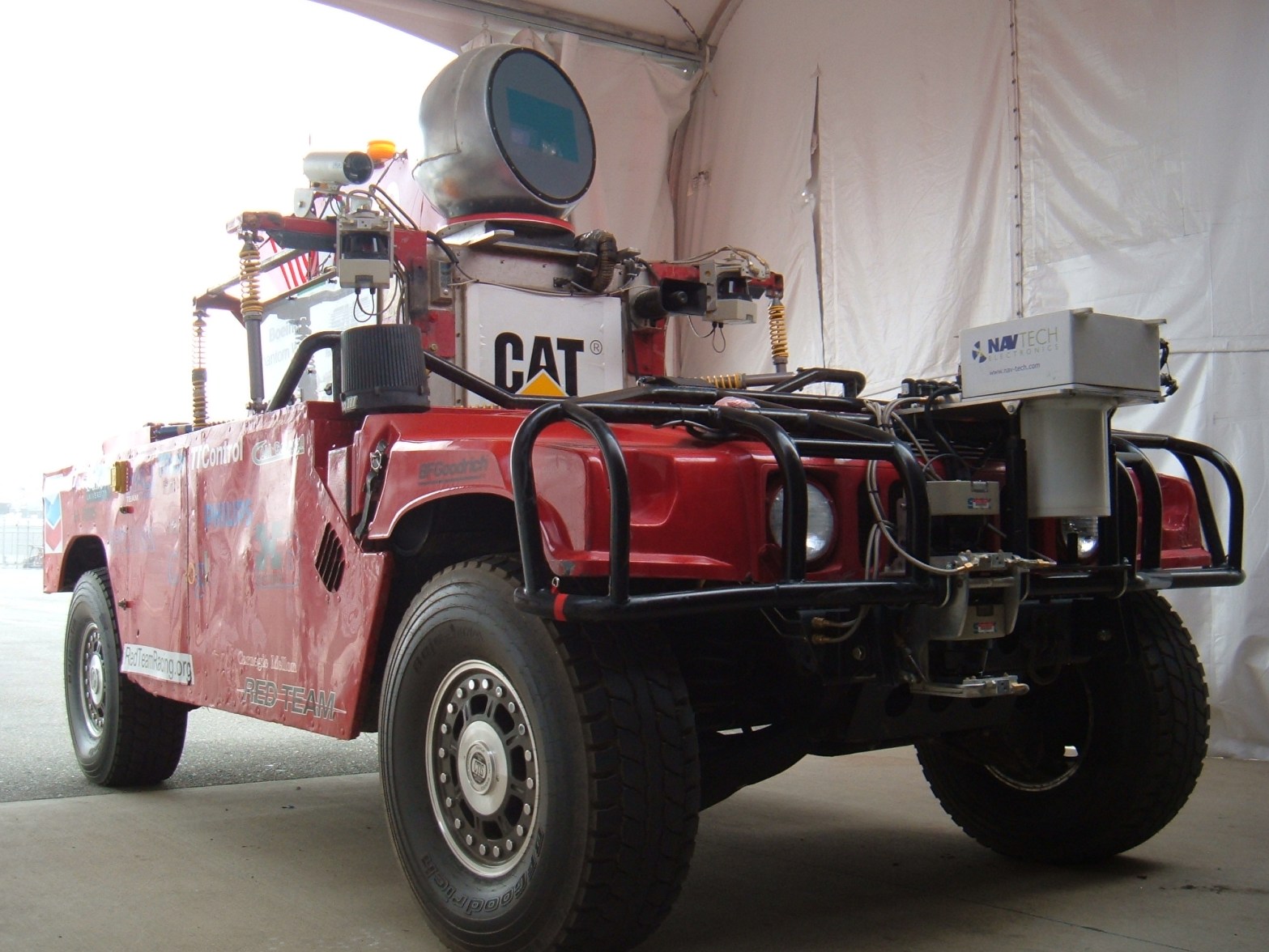
Vision-based navigation uses cameras to estimate motion, understand the environment, and help a robot or vehicle move safely through space. It is attractive because cameras are relatively cheap, lightweight, and rich in detail. A single frame can contain landmarks, lane markings, free space, signs, texture, and semantic cues that other sensors may not capture as naturally.
But camera-based navigation is not simply “look at an image and drive.” A practical navigation stack needs stable calibration, time synchronization, robust pose estimation, and a way to recover when the scene becomes ambiguous.

What vision-based navigation really does
At a practical level, vision-based navigation answers three questions:
- Where am I?
- How am I moving?
- What is around me, and where can I go next?
Depending on the platform, the answer may rely on visual odometry, landmark tracking, semantic road understanding, stereo depth, or full SLAM. In an indoor robot, the system may rely on features and loop closure. In a road vehicle, it may use cameras for lane geometry, localization cues, and scene semantics while radar, GNSS, IMU, and maps handle complementary tasks.
The core pipeline
A practical camera-navigation pipeline often looks like this:
- Capture synchronized images from one or more calibrated cameras.
- Extract visual information such as features, edges, segments, landmarks, or semantic masks.
- Estimate motion using frame-to-frame correspondences, optical flow, stereo disparity, or learned motion models.
- Build or update a map of landmarks, occupancy, or semantic structure.
- Fuse with other sensors such as IMU, wheel odometry, GNSS, LiDAR, or radar.
- Provide pose and environment estimates to planning and control.
That pipeline may sound straightforward, but every stage can fail if the image stream is noisy, blurred, poorly synchronized, or visually repetitive.
Visual odometry and SLAM
Two ideas appear in almost every camera-navigation system: visual odometry and SLAM.
Visual odometry estimates the motion of the camera by tracking how the scene changes across frames. It is local and continuous. It tells the system how it moved over the last short period of time.
SLAM, or simultaneous localization and mapping, goes further. It tries to build a consistent map while also using that map to improve localization. Loop closure is especially important here. If the robot revisits a known place, the system can reduce drift and relocalize more accurately.
Systems such as ORB-SLAM became influential because they showed that a camera-only pipeline could estimate trajectory in real time across a wide range of environments. Newer systems expanded this idea to stereo, RGB-D, and visual-inertial settings.
navigation stack
    -> synchronized camera frames
    -> feature tracking or semantic perception
    -> relative pose estimate
    -> map update / loop closure
    -> fused state estimate
    -> planner and controller
What cameras are good at in navigation
Cameras are especially useful when the platform needs semantic context in addition to geometry.
- Road structure: lanes, curbs, drivable area, intersections, merges, and signs.
- Landmarks: textured features, repeated landmarks, or learned place descriptors.
- Obstacle understanding: identifying whether something is a car, pedestrian, bike, or static structure.
- Localization support: map matching and relocalization from known visual features.
This semantic richness is why cameras remain central in ADAS, delivery robots, warehouse systems, and many research platforms.
Monocular, stereo, and multi-camera navigation
Not all vision-based navigation systems see the world the same way.
- Monocular: lowest cost and simplest hardware, but scale is ambiguous without motion priors or fusion.
- Stereo: adds depth through disparity, making pose and obstacle reasoning more stable.
- Multi-camera surround view: improves coverage at intersections, blind spots, and tight maneuvers.

Monocular systems can still work very well, especially with IMU fusion, but stereo or multi-camera setups reduce ambiguity when metric depth matters.
Why fusion matters
Camera navigation alone can be impressive, but robust deployed systems almost always fuse vision with other sources of information. An IMU helps stabilize short-term motion estimation. Wheel odometry provides a useful prior for ground robots. GNSS helps with large-scale outdoor localization. LiDAR or radar can add stronger geometric constraints under difficult lighting conditions.
The engineering goal is not to replace every other sensor with cameras. The goal is to let cameras contribute what they do best and rely on fusion when ambiguity grows.
Common failure modes
Vision-based navigation fails for understandable reasons, and those failure modes should shape the system design:
- low light or night scenes reduce usable detail
- glare, rain, fog, and dirty lenses degrade image quality
- textureless walls or roads reduce feature quality
- dynamic crowds or heavy traffic can confuse motion estimation
- repetitive patterns create false matches
- timing and calibration errors break the geometry
If a system does not monitor these conditions, it may produce confident but wrong poses. That is one of the main reasons why state estimation and uncertainty reporting matter so much.
A practical engineering checklist
When evaluating a vision-navigation stack, I would check these points first:
- How well is camera calibration maintained over time?
- What is the end-to-end latency from sensor capture to pose output?
- How much drift appears before loop closure or relocalization?
- How does the system behave in low-texture or high-dynamic scenes?
- Which modules depend on pure vision and which depend on fusion?
- Can the planner detect when localization confidence drops?
Those questions reveal much more than a single demo video.
Conclusion
Vision-based navigation is powerful because cameras provide both geometry and semantics. They help a system estimate motion, understand roads or indoor structure, recognize landmarks, and support localization over time. But reliable navigation requires more than a neural network. It requires calibration discipline, temporal reasoning, mapping, and sensible fusion with other sensors. That is what turns camera-based navigation from a nice demo into a dependable part of a robotics or autonomous-driving stack.
References
- ORB-SLAM project repository: https://github.com/raulmur/ORB_SLAM
- ORB-SLAM3 project repository: https://github.com/UZ-SLAMLab/ORB_SLAM3
- OpenCV camera calibration tutorial: https://docs.opencv.org/4.x/dc/dbb/tutorial_py_calibration.html
- OpenCV calibration with OpenCV: https://docs.opencv.org/4.x/d4/d94/tutorial_camera_calibration.html
 ACE IT SKILLS

