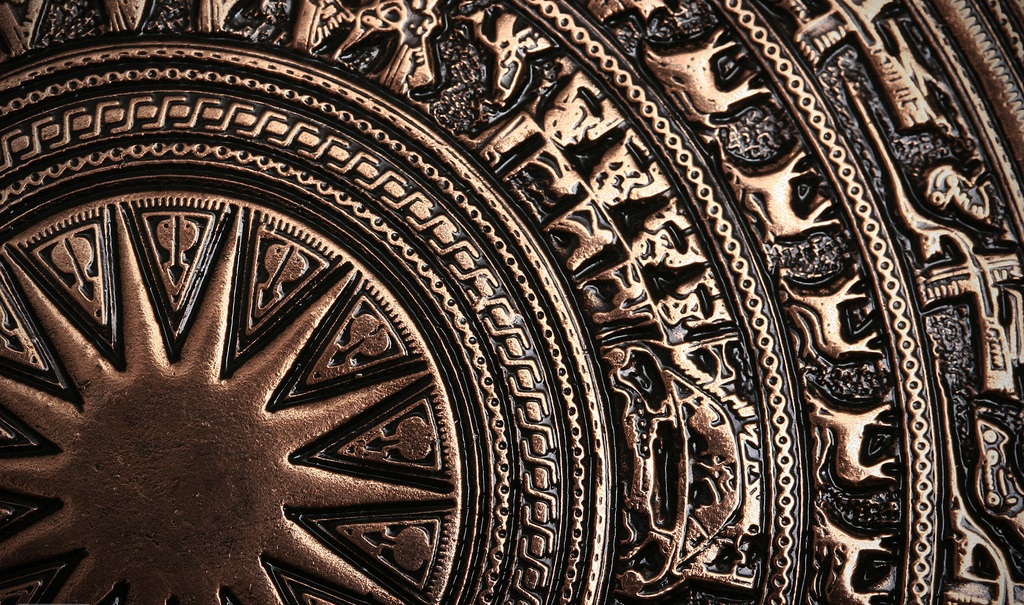
Dong Son drums are among the most iconic artifacts of ancient Vietnamese culture. They are not only bronze objects of technical skill, but also historical symbols that reflect ritual life, artistic expression, social organization, and early metallurgical achievement.
What the Dong Son Drums Are
These bronze drums are associated with the Dong Son culture, which flourished in northern Vietnam in the late Bronze Age. The drums vary in size and decoration, but many are notable for their carefully cast patterns, geometric designs, animals, boats, dancers, and central star motifs.
Why They Matter Historically
Dong Son drums show that ancient communities in the region possessed advanced bronze-casting techniques and a rich symbolic culture. They are important not only as archaeological finds, but also as evidence of social complexity, craftsmanship, and cultural identity.
What the Decorations Suggest
The images on the drums are often interpreted as clues about daily life and ritual practice. Boats may point to river and maritime activity. Birds and animals may reflect cosmology or nature symbolism. Human figures suggest ceremony, music, and communal events.
Why They Still Matter Today
For many Vietnamese people, Dong Son drums are more than museum objects. They are cultural memory. They represent continuity between ancient history and modern identity, showing that the region has a long and sophisticated civilizational story.
A Broader Reflection
I find the Dong Son drums interesting not only because of their age, but because they connect engineering, art, and culture. A bronze drum is both a technical achievement and a symbolic object. That combination makes it much more powerful than a simple tool.
Final Thoughts
Studying artifacts like the Dong Son drums reminds us that culture and technology have always been linked. Long before modern software or machines, people were already building objects that carried both practical skill and deep meaning.


