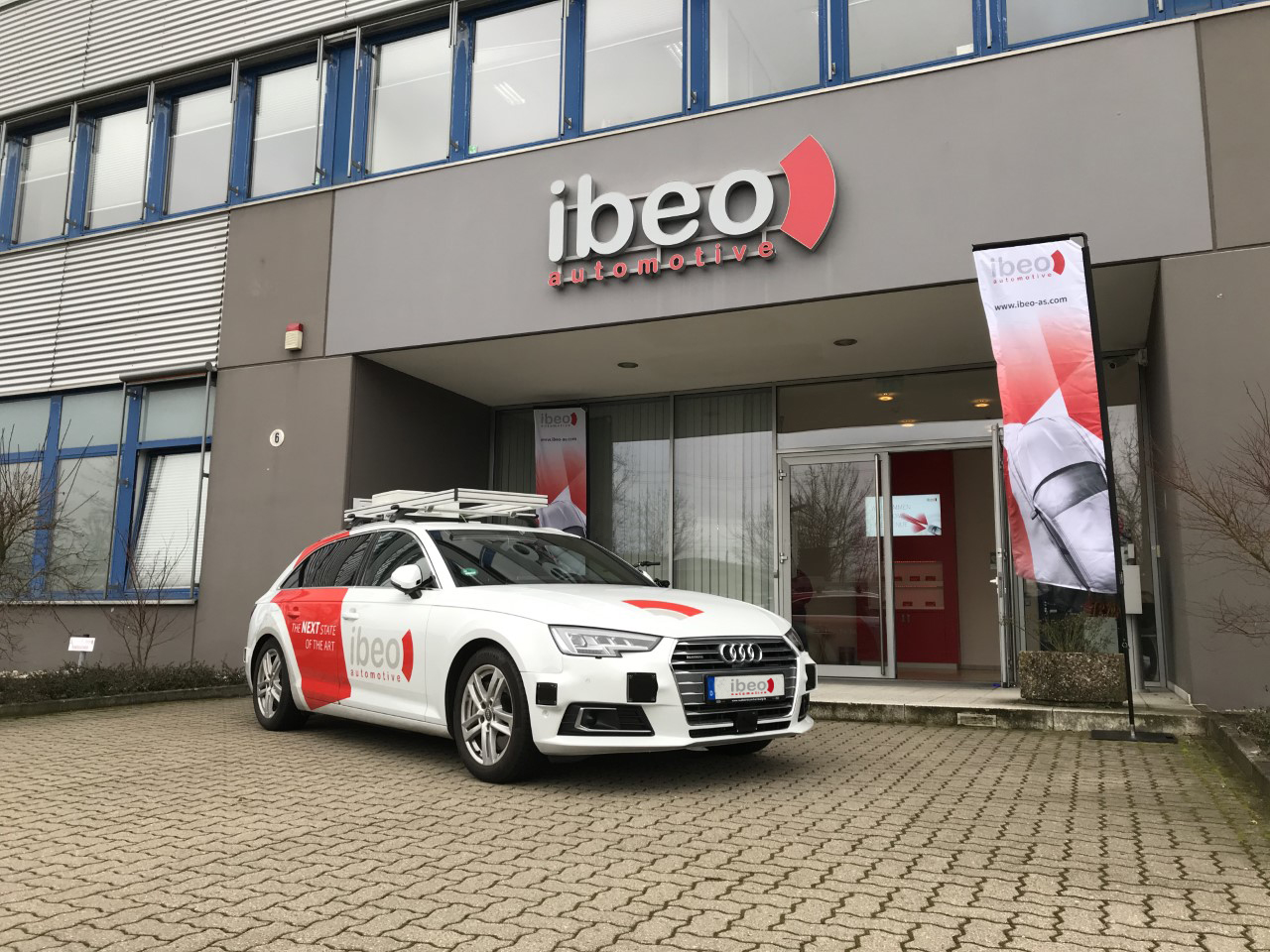
LiDAR stands for Light Detection and Ranging. It measures distance by sending out laser pulses and calculating how long the reflected light takes to return. This makes LiDAR a powerful sensor for building 3D representations of the environment.
How LiDAR Works
The basic principle is simple: emit light, measure return time, and convert that into distance. By repeating this process rapidly across many directions, LiDAR builds a cloud of points that describe the surrounding scene.
A simplified idea looks like this:
distance = speed_of_light * time_of_flight / 2The division by two is necessary because the pulse travels to the object and back.
Why Engineers Like LiDAR
- It provides accurate geometric measurements.
- It works well for mapping and obstacle detection.
- It can provide dense 3D structure that cameras do not directly measure.
Common Use Cases
- Autonomous driving: detect vehicles, road edges, and free space.
- Mobile robotics: SLAM, obstacle avoidance, and localization.
- Surveying: terrain and structural measurement.
- Industrial automation: safety zones and dimensional inspection.
2D vs 3D LiDAR
2D LiDAR scans a plane and is common in indoor mobile robots. 3D LiDAR scans many vertical angles and can capture richer scene structure, which is especially useful in outdoor robotics and autonomous vehicles.
Limitations in Practice
- LiDAR hardware can be expensive.
- Rain, dust, and reflective surfaces may affect measurements.
- Point clouds need additional processing before they become actionable information.
- A strong perception pipeline is still required to interpret raw geometry.
A Practical Example
A self-driving car may use LiDAR to estimate obstacle position and shape around the vehicle. The perception stack clusters the point cloud, tracks nearby objects, and passes those results to prediction and planning modules. In a warehouse robot, a simpler LiDAR may be enough for 2D obstacle detection and map building.
Why Fusion Still Matters
LiDAR is powerful, but no sensor should be treated as perfect. Cameras provide color and semantic detail. Radar works well in adverse weather. IMU and odometry help stabilize motion estimates. Sensor fusion is therefore the practical engineering answer in most real systems.
Final Thoughts
LiDAR is one of the most important sensing technologies in robotics and autonomy because it turns distance measurement into a usable geometric view of the world. Its value is not just in the hardware, but in how well it is integrated into the full system.


Hi Thành. Tôi cần gặp bạn về proj khá hay.
Liên lạc lại hltri@yahoo.com ; viber/whatsapp +84.988083352
LikeLike